Last updated November 18, 2026
How to Hire an ADU Contractor in Paradise: A Step-by-Step Guide
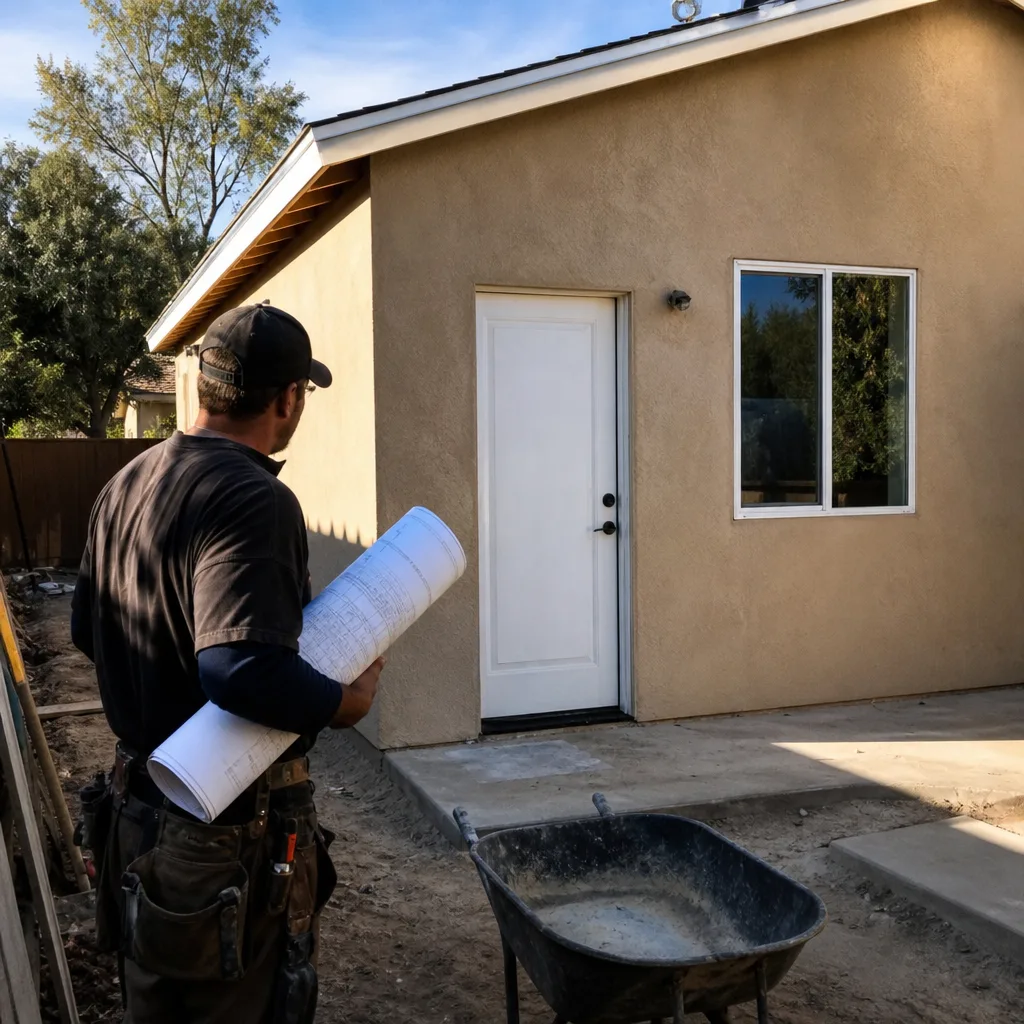
Most homeowners assume the hard part of an ADU is finding someone who will build it. In Paradise, that’s backwards. Plenty of builders will say yes to an ADU. The real work is cutting through that list fast to find the one who has actually pulled an ADU permit, priced the whole job in writing, and will still be standing when the final inspection happens. The vetting process is a filter, not a sales courtship. This guide gives you the questions, the contract terms to demand, and the bid red flags that separate a real ADU specialist in Paradise from a general contractor treating your project as filler work.
Quick Answer
Hire an ADU contractor in Paradise by verifying one thing first: how many ADU-specific permits and certificates of occupancy they’ve pulled in Clark County recently, and prove it through the county’s public permit portal, not a testimonial. Then compare bids on scope, allowances, and permit fees line-by-line, insist on a fixed-price contract with a written spec, and confirm who controls the schedule and inspections from permit to move-in. A dedicated ADU specialist with a single named point of accountability beats a general contractor who subs every trade and leaves the permit in limbo.
Table of Contents
- Why the Paradise ADU Market Rewards a Filter-First Approach
- The One Verifiable Question to Ask Every Contractor
- How to Verify an ADU Contractor’s Claim
- Why Fixed-Price Contracts Matter More for ADUs Than Remodels
- Red Flags Unique to ADU Bids
- How to Compare Bids That Use Different Spec Levels
- General Contractor vs. Dedicated ADU Builder
- Prefab or Custom: What the Vetting Adds
Why the Paradise ADU Market Rewards a Filter-First Approach
Paradise has the ingredients that make ADUs attractive: existing single-family lots, mature neighborhoods, and homeowners who want to unlock value from property they already own. That demand pulls in builders of every kind, and not all of them understand the specific permitting, utility, and inspection path an ADU requires. When the market is busy, the contractor’s answer to “can you do it?” stops being meaningful. What matters is whether the answer is backed by a track record you can verify yourself.
That reframes how you should spend your first round of calls. You’re not trying to be the most appealing client so a builder picks you. You’re running a fast elimination round. A handful of calls and a few portal lookups can remove half your candidate list before anyone comes to your property. That saves weeks, and it protects the deposit you’d otherwise sink into the wrong contract.
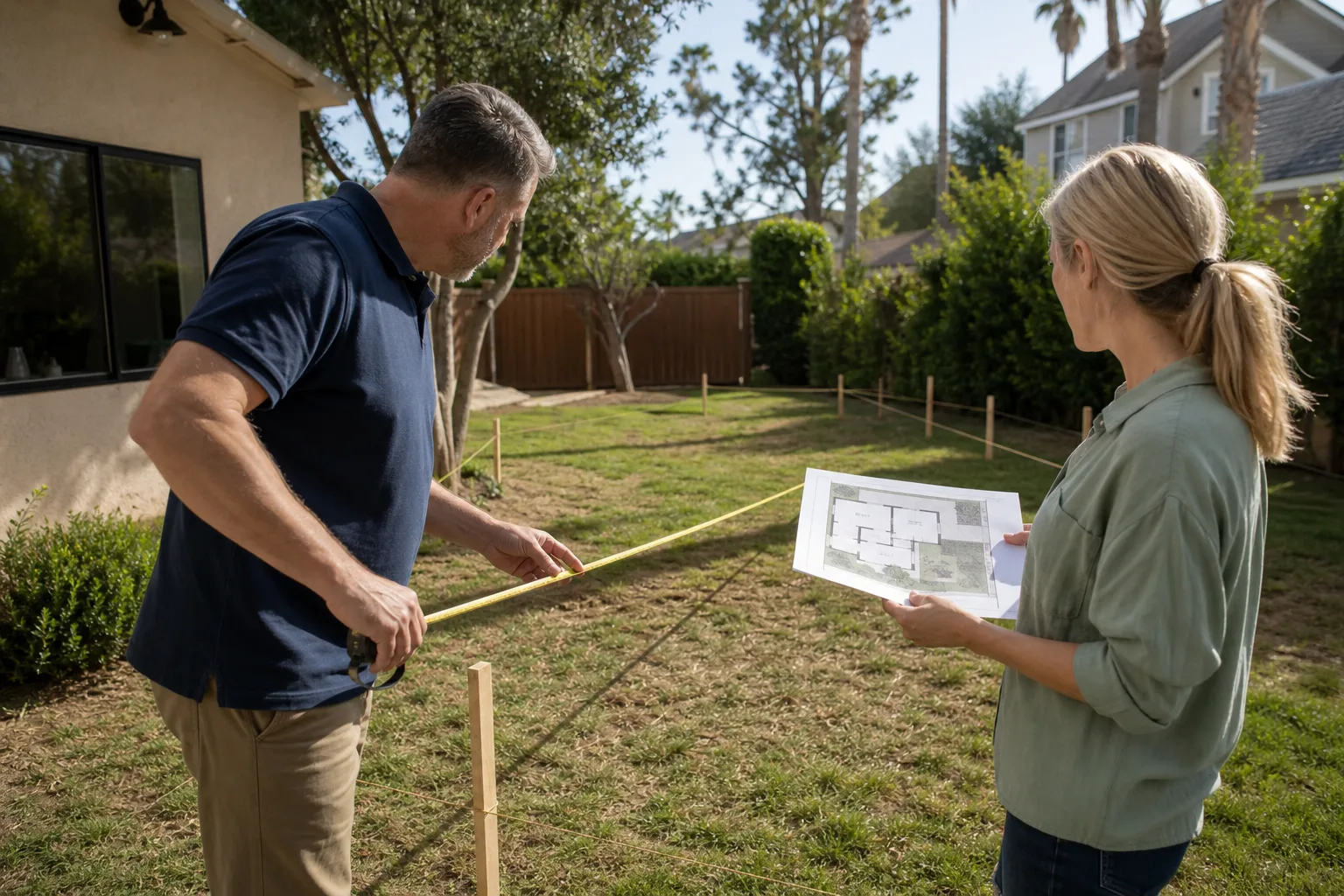
Neighborhood context matters here too. Lots in Paradise vary from flat and simple to tighter parcels with tricky utility access, and the frontage, setback, and access conditions on your specific lot drive the real cost and the real plan set. A contractor who can talk through those site realities in the first meeting is showing you how they think. One who answers in generalities is showing you something less useful.
This guide is written from Paradise, and the principles below apply broadly across the valley. If your property is nearby, the Paradise page covers how we approach the local market, and the questions stay the same wherever your lot sits. Our technicians have up to 8 years of experience, which shapes how we evaluate the site conditions that trip up less prepared builders.
The One Verifiable Question to Ask Every Contractor
Ask this on the first call, before anyone visits: “How many ADU certificates of occupancy have you pulled in Clark County in the last 24 months?” A certificate of occupancy is the county’s final sign-off that a structure is complete, permitted, and legal to occupy. It’s not a claim. It’s a record. Any builder who has completed real ADU work in the area can answer with a number and point you to the permits behind it. A builder who can’t answer is telling you exactly where you stand.
Why a certificate of occupancy and not just a permit? Because a pulled permit proves someone filed paperwork. A certificate of occupancy proves the job was finished, inspected, and closed out. Many permits get pulled and never reach final sign-off. Ask for the CO, not the permit, and you instantly filter out the builders who start jobs but don’t finish the compliance side.
Here’s how to run the first call efficiently:
- State your property type and what you want to build (detached unit, garage conversion, or addition).
- Ask the certificate of occupancy question verbatim. Listen for a number, not a story.
- Ask which jurisdiction the permits were pulled in and whether any inspections on those jobs are still open.
- Ask who on their side owns the permit process, the schedule, and the inspections from start to finish.
- Ask how they handle soils or site investigation before pricing.
- Ask whether they’ll give you a written, fixed-price scope before you sign anything.
A solid candidate answers all six without hedging. A weak one drifts toward “it depends” and never comes back. That single call is your fastest filter, and it costs you nothing but a few minutes. When the ADU specialist you’re talking to can point to real completions, the conversation shifts from persuasion to planning, which is where it should be.
How to Verify an ADU Contractor’s Claim
Verify the answer yourself rather than taking the number at face value. In most jurisdictions, including Clark County, permit records are public and searchable through the local building department’s online portal. Look up the contractor’s name or the project addresses, check the permit type, and confirm whether the record shows a final inspection and certificate of occupancy. This takes minutes and tells you more than any reference list.
Verification matters because ADU work sits in a category that general contractors sometimes take on without deep experience. An ADU involves its own zoning questions, utility connections, and inspection sequence. A builder who mainly does full home remodels may handle the framing just fine and still stumble on the ADU-specific permitting path. Checking the record separates builders who have walked that path from builders who are learning on your job.
A few things to check when you look at the portal:
- Permit type: confirms whether the job was actually filed as an ADU or something else.
- Final inspection status: shows whether the job was closed out or left open.
- Certificate of occupancy date: proves the unit became legal to occupy.
- Open corrections or notices: flags jobs that stalled on compliance.
Ask the contractor to walk you through one completed record. Someone who has done the work can explain the sequence comfortably and in detail, including the inspection steps and the corrections that came up. Someone who hasn’t will go vague. It’s one of the clearest signals you’ll get, and you don’t need any technical background to read it. If you’re comparing a prefab unit from a brand like Cover against a site-built plan, confirm the contractor has closed out jobs of each type, because the permitting path can differ.
Why Fixed-Price Contracts Matter More for ADUs Than Remodels
An ADU is a ground-up build with a large, fixed set of decisions made before breaking ground. That makes it far more predictable than a remodel, where unknown conditions inside existing walls create legitimate change orders. When an ADU project comes with a fixed price and a detailed scope, the builder has already done the thinking. When it doesn’t, the open-ended structure is where scope creep enters. A fixed-price contract with a written, line-item scope and no change orders is the single best protection for your budget on an ADU.
Remodels earn their change orders. You open a wall, you find something, you adapt. An ADU doesn’t have that excuse. The plan set is approved, the site is known, the finishes are specified. So when a bid leaves gaps that will later get filled by change orders, those gaps were a pricing decision, not a surprise. The contractor who wants your budget to stay fixed will close those gaps in the contract before you sign.
Watch specifically for line items that turn into scope creep on an ADU:
- Utility connection allowances: a vague “allowance for utility tie-ins” without a number or a scope is a change order waiting to happen. Get the connection work specified.
- Site prep and grading: left open, this becomes add-on work after excavation.
- Finish allowances: an allowance with no cap or spec lets the finish budget float.
- Inspection corrections: confirm in writing who pays for corrections needed to pass an inspection.
Ask for the estimate in writing with each line specified, and ask what happens if a line is exceeded. The right answer is that the written estimate sets the final price. That’s how the number should work, and a contractor confident in their scope will put it in the contract.
Red Flags Unique to ADU Bids
ADU bids have their own warning signs, and they cluster around what’s missing rather than what’s priced. A thorough bid shows the whole job; a thin one hides risk in the gaps. Read every bid looking for what isn’t there. The omissions are often more telling than the totals.
The red flags to watch for:
- No permit fees in the contract. If permit and plan-check fees aren’t listed, they’ll appear later as a separate charge. ADU permits carry their own fees, and a complete bid includes them or states clearly who pays.
- Vague utility connection allowances. Utility tie-ins are a common source of scope creep. A bid that says “utilities included” without a number or scope is telling you something.
- No mention of soils or site investigation. Soil conditions and site grading affect foundations and drainage. A bid that skips this entirely either didn’t look at your lot or is planning to bill you later.
- No construction schedule in writing. A real ADU bid states the schedule and who owns it. “We’ll get to it when we can” is not a schedule.
- No named person accountable for the permit. Confirm who runs the permit, the inspections, and the schedule, and get it in writing.
- Reference list without addresses or permit numbers. Ask for project records you can verify in the portal.
Our experience comparing bids is that the strongest ones are the least vague. They specify the scope, price the permit fees, note the site investigation, and commit to a fixed price. That thoroughness is the point. When you’re ready to plan, our ADU builders walk through each of these items with you before a single number is final.
How to Compare Bids That Use Different Spec Levels
Two bids that both say “standard finish” can differ by tens of thousands of dollars in scope, and comparing totals alone will mislead you. Normalize the bids first by writing a single spec sheet and asking each contractor to price the same thing. That single step turns apples and oranges into a fair comparison and stops a “cheaper” number from quietly being a thinner build.
Define “standard finish” for your project in writing, then require every bid to match it. Your spec sheet should specify:
- Foundation and slab: the slab type, thickness, and any drainage provisions.
- Framing and insulation: the assembly type, materials, and insulation approach that suits a Paradise climate.
- Windows and doors: quality tier and manufacturer class, not a brand name you can’t verify.
- Exterior cladding and roofing: material class, not just “roof included.”
- Interior finishes: flooring, cabinetry, counters, and fixtures at a defined tier, so allowances can’t float.
- Mechanical and electrical: what’s included in the base price and what’s an upgrade.
Once the spec is fixed, ask each contractor to price the same sheet and to note any line they’ve excluded. The exclusions are where honest bids separate. A contractor who lays out what’s not included is giving you a complete picture. A contractor whose bid looks complete but has silent exclusions is passing risk back to you. When you’re comparing a modular unit from Abodu or Dvele against a site-built plan, the spec holds either way, because the finish level still has to be defined and priced.
This is also where a specialist’s day-to-day knowledge of both prefab and site-built options pays off. Prefab and custom aren’t an either-or; we know both, and the spec sheet lets you judge the options on equal footing.
General Contractor vs. Dedicated ADU Builder
The most important structural question you can ask is whether the person running the job controls the permit, the schedule, and the inspections, or whether they sub out every trade and step back. A general contractor who hands each trade to a different subcontractor can deliver a good ADU, but the accountability chain gets longer. A dedicated ADU builder who owns the permit process, the schedule, and the inspection sequence gives you a single point of accountability from permit to move-in.
This isn’t about size. It’s about control and focus. A builder whose main business is ADUs brings permit, zoning, and utility-connection experience to every project, because that’s what they do all day. A general contractor who occasionally takes an ADU has to re-learn the specific path each time, and the learning bends toward their comfort zone, not your project’s needs.
Here’s how to tell the difference in a meeting:
- Ask who runs the permit file, and get a name and role in writing.
- Ask who schedules inspections and what happens if one fails.
- Ask how the schedule is managed and who tracks it.
- Ask which trades they do themselves versus subcontract, and how the subcontractors are managed.
- Ask for one verified project record that traces from permit to certificate of occupancy.
A dedicated ADU builder answers all five cleanly, with documentation. A general contractor tends to answer them in general terms and shifts the details to later. The difference shows up again during the build, when a failed inspection or a scheduling conflict has to be resolved by whoever actually owns the process. At Casita Builders Paradise, the entire focus is the ADU itself: new builds, room additions, and garage conversions. That focus is what lets us own the permit, the schedule, and the inspections rather than passing them along.
Prefab or Custom: What the Vetting Adds
The vetting framework applies whether you build custom or choose a prefab system, but the questions shift slightly for modular. Many homeowners ask whether and when to hire a professional for the planning and site side of a prefab unit. Prefab systems from brands like Abodu, Cover, and Dvele handle the structure in a factory, but the site work, foundations, utility connections, and permitting still flow through the same local process. So you’re still vetting the person who coordinates the site, and that person should know both pathways.
The questions that matter most for a prefab path:
- Site readiness: who manages the site investigation, foundation, and utility connections, and how is that priced?
- Permit path: who pulls the ADU permit and who owns the inspections on the site work?
- Brand counsel: does the contractor work with multiple systems and recommend by your site and goals, or push a single brand?
- Schedule: how does the factory lead time combine with site work, and who owns the overall schedule?
In our experience, the strongest counsel comes from someone who knows multiple prefab platforms and can compare them honestly against a site-built approach. That’s the difference between a sales pitch and a recommendation. A brand-agnostic ADU specialist will tell you when a site-built unit fits your lot better, and vice versa. If you’re considering adding living space rather than a full detached unit, a room addition contractor can walk that path with the same discipline, holding the spec, the permit, and the schedule together.
Common Mistakes to Avoid
- Treating “we can build an ADU” as proof. It’s an answer, not a record. Ask for the certificate of occupancy count and verify it in the county portal before you invest time in a site visit.
- Accepting a bid without permit fees listed. Missing permit fees are one of the most common ways an ADU budget stretches after signing. Require them in the contract.
- Letting “standard finish” stand undefined. Comparing bids at different spec levels is the fastest way to overpay or under-build. Write a spec sheet and price it uniformly.
- Skipping the utility connection scope. A vague utility allowance is a change order in disguise. Get the tie-ins specified and priced.
- Never asking who owns the permit and inspections. If no one on the builder’s side owns the process, you own it by default, and you’re not set up for it.
- Ignoring the site investigation. Parcels in and around Paradise vary, and soil and grading conditions affect the foundation and drainage. A bid that skips the site investigation skips a real cost.
- Choosing on total price alone. A low total with silent exclusions isn’t a lower price, it’s a smaller scope. Compare scope first, price second.
When to Call a Professional
Bring in an ADU specialist early, before you’ve locked in a design or a budget, because the questions that shape cost are the ones you’ll ask in the first meeting. Call when you’re considering a detached unit and need to know whether your lot supports one, when you’re converting a garage and need the permit path checked, or when you’re adding living space and want the schedule and inspections owned from start to finish. Call when you’ve received bids and you can’t tell whether two quotes are describing the same project. Call when a contractor’s “yes” answered your question but a certificate of occupancy would answer it better. Casita Builders Paradise offers free estimates in Paradise. Call (888) 576-4674. We answer 24/7. Fast dispatch from 7am to 7pm, Sunday through Friday. The estimate is in writing with line items specified, and the written estimate sets the final price.
Frequently Asked Questions
Hire an ADU contractor in Paradise by verifying ADU-specific certificates of occupancy through the Clark County permit portal, comparing bids on a written spec sheet, and requiring a fixed-price contract with permit fees and site investigation included. A dedicated ADU specialist who owns the permit, schedule, and inspections is the one to look for. Call (888) 576-4674 for a free estimate.
Ask how many ADU certificates of occupancy they’ve pulled in Clark County in the last 24 months, then verify it in the public permit portal. A certificate of occupancy proves a job was finished and closed out, not just started. A contractor with real completions will give you a number and point to the records. Call (888) 576-4674 if you’d like to go through a verified project record with our team.
A fixed-price contract matters more for an ADU because the plan set is approved and the site is known before breaking ground, so there’s no legitimate reason for scope gaps. Remodels earn change orders from what’s hidden in existing walls; an ADU doesn’t. A written estimate with line items and no change orders protects your budget. Call (888) 576-4674 for a written estimate where the final price is set.
The top ADU bid red flags are vague utility connection allowances, permit fees missing from the contract, no mention of soils or site investigation, no written schedule, and no named person accountable for the permit. Each one is a gap where scope creep enters after you sign. Call (888) 576-4674 and we’ll review your bid against a complete scope.
Compare ADU bids by writing your own spec sheet first, then asking each contractor to price the same sheet and list any exclusions. Define “standard finish” in writing for the foundation, framing, windows, cladding, finishes, and mechanical work. Comparing totals without a fixed spec is how homeowners end up overpaying or under-building. Call (888) 576-4674 for help aligning bids to one scope.
A dedicated ADU builder controls the permit, the schedule, and the inspections as a single point of accountability, while a general contractor may sub every trade and step back. That accountability chain matters when a failed inspection or scheduling conflict needs resolving. An ADU-only focus brings deeper permitting and utility know-how to every project. Call (888) 576-4674 to talk through how we keep accountability in one place.
The Bottom Line
Hiring an ADU contractor in Paradise is a filtering job, not a sales pitch. Lead with the certificate of occupancy question and verify the answer in the county portal. Compare bids only after you’ve fixed the spec, and demand permit fees, utility scope, and the site investigation in the contract. Insist on a fixed price with no change orders, and confirm who owns the permit, the schedule, and the inspections from permit to move-in. Do those things, and the wrong builders leave the conversation early, while the right one joins your project with a verified record behind them. Our technicians have up to 8 years of experience, and every estimate is written, line-item, and free.
Call (888) 576-4674 for a free estimate. We answer 24/7. Fast dispatch from 7am to 7pm, Sunday through Friday. Your property, fully realized, starts with the right contractor and the right scope, and we’re glad to walk you through both before you commit.
Written by the team at Casita Builders Paradise.