Last updated November 18, 2026
ADU Cost Breakdown: The Paradise Homeowner’s Reference for 2026
You’ve probably seen the $150-per-square-foot number floating around ADU forums and local Facebook groups. Treat it as a floor, not an average. In Paradise’s current labor market, budgeting from that figure will strand your project mid-construction, usually right around the time the concrete is poured and the framing crew is waiting. The real spread in 2026 runs from roughly $90,000 for a well-executed garage conversion to $340,000 for a custom detached unit with premium finishes, and every dollar of that gap is explainable. This reference breaks down where the money actually goes in Paradise, which cost drivers are local, and which variables you control before the first shovel hits the ground.
Quick Answer
An ADU in Paradise typically costs between $90,000 and $340,000 in 2026, depending on type and finish level. Garage conversions land at the low end, detached site-built units at the high end, and prefab systems like Abodu or Cover fall somewhere between once delivery and site work are factored in. Soft costs (permits, engineering, design, utility connections) add roughly 18-25% on top of hard construction costs, and local conditions like caliche soil and summer pour scheduling can push that higher. The written line-item estimate is what sets your final price.
Table of Contents
- What does an ADU cost per square foot in Paradise?
- How do the five ADU types compare on price?
- Which Paradise-specific factors drive up cost?
- What do soft costs actually include?
- Where does value engineering save money, and where does cutting budget backfire?
- How does prefab pricing compare to site-built bids?
- How do you build a realistic ADU budget step by step?
- Common mistakes to avoid
What does an ADU cost per square foot in Paradise?
Most ADU projects in Paradise land between $250 and $450 per square foot for hard construction in 2026, with the spread driven by unit type, site conditions, and finish level rather than by any single line item. That range is wider than what national cost guides publish, and it’s wider for a reason: Paradise has soil conditions and seasonal scheduling realities that generic guides don’t account for.
Here’s how that breaks down by segment:
- Junior ADU (JADU): $180-$280 per square foot. These are small, typically converted from existing space within the main home’s footprint, so they carry fewer site work costs but are constrained by existing construction.
- Garage conversion: $200-$320 per square foot. You’re working with an existing shell, which saves on foundation and framing, but you’re adding insulation, mechanical systems, and a kitchen and bath from scratch.
- Attached addition: $280-$400 per square foot. Tying into the main house means shared structural work and a more complex roofline, which adds labor.
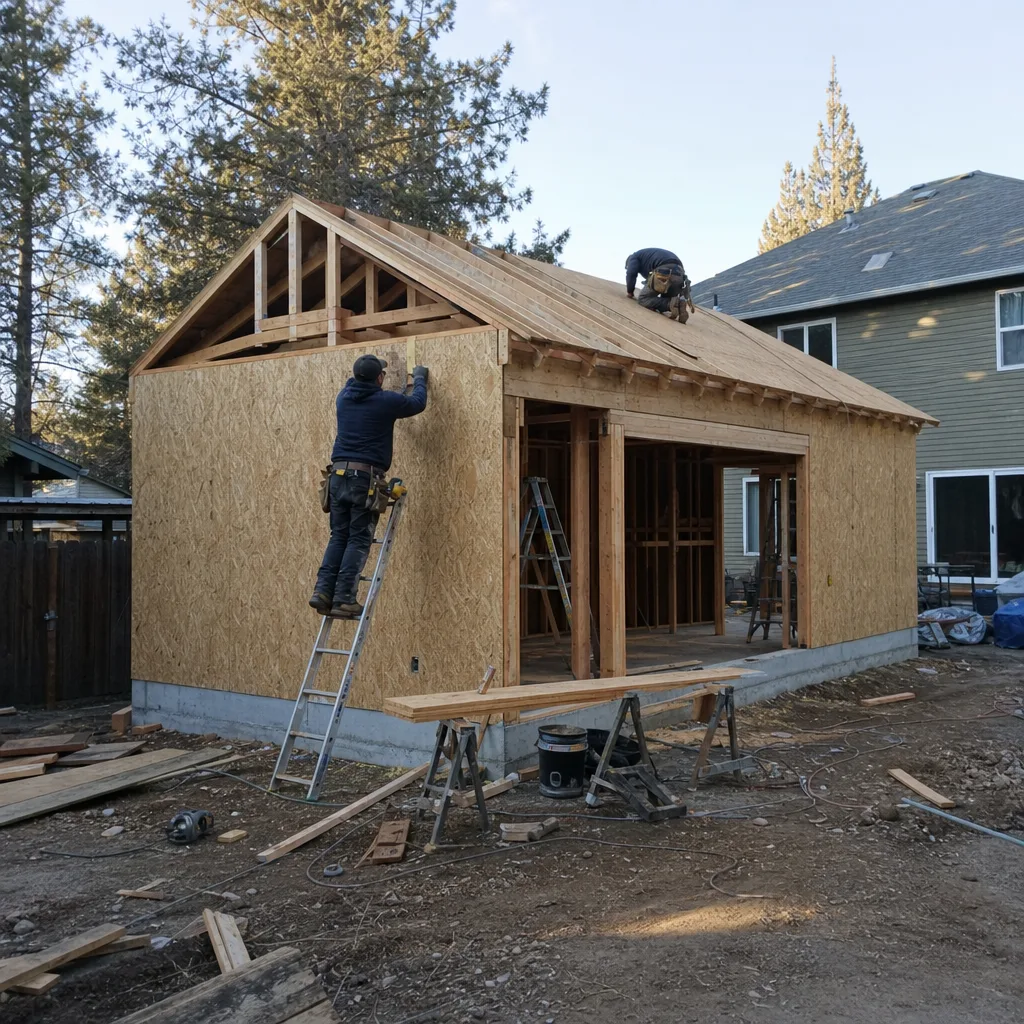
- Detached site-built: $300-$450 per square foot. Full foundation, full utility runs, full envelope. This is where custom finishes can push you toward the top of the range.
- Prefab drop-in: $250-$400 per square foot all-in, once delivery and site work are included. The unit itself often prices lower per square foot, but the site work is the variable that surprises people.
If you want a rough budget anchor, the middle of the detached range ($350 per square foot) is a safer planning figure than the $150 number circulating online. A dedicated ADU builder can walk your specific lot and tighten that range considerably before you commit to a design.
How do the five ADU types compare on price?
The five ADU pathways available to Paradise homeowners differ not just in cost but in what they demand of your lot, your timeline, and your existing structure. Choosing the right type for your property is the single biggest cost decision you’ll make.
Junior ADU (JADU)
The JADU is the smallest and least expensive option, created by converting existing space within your home’s footprint. Because you’re not adding a new structure, foundation and envelope costs drop dramatically. The trade-off is size and layout flexibility: JADUs are compact by definition, and the conversion has to work within the existing walls.
Garage conversion
A garage conversion is often the highest-ROI ADU path for existing homeowners because the shell, foundation, and roof already exist. You’re investing in the interior: insulation, mechanical, electrical, plumbing, kitchen, and bath. In a Paradise home with a standard two-car garage, the conversion typically runs $200-$320 per square foot. We’ve seen this pathway consistently pencil out for homeowners who want rental income or a space for family without the full cost of new construction.
Attached addition
An attached ADU shares a wall with the main house, which means shared structural work and a more complex roofline. The structural tie-in and the need to blend the addition with the existing house’s systems push the per-square-foot cost into the $280-$400 range. An experienced room addition contractor can tell you early whether your existing structure can support the tie-in without major reinforcement.
Detached site-built
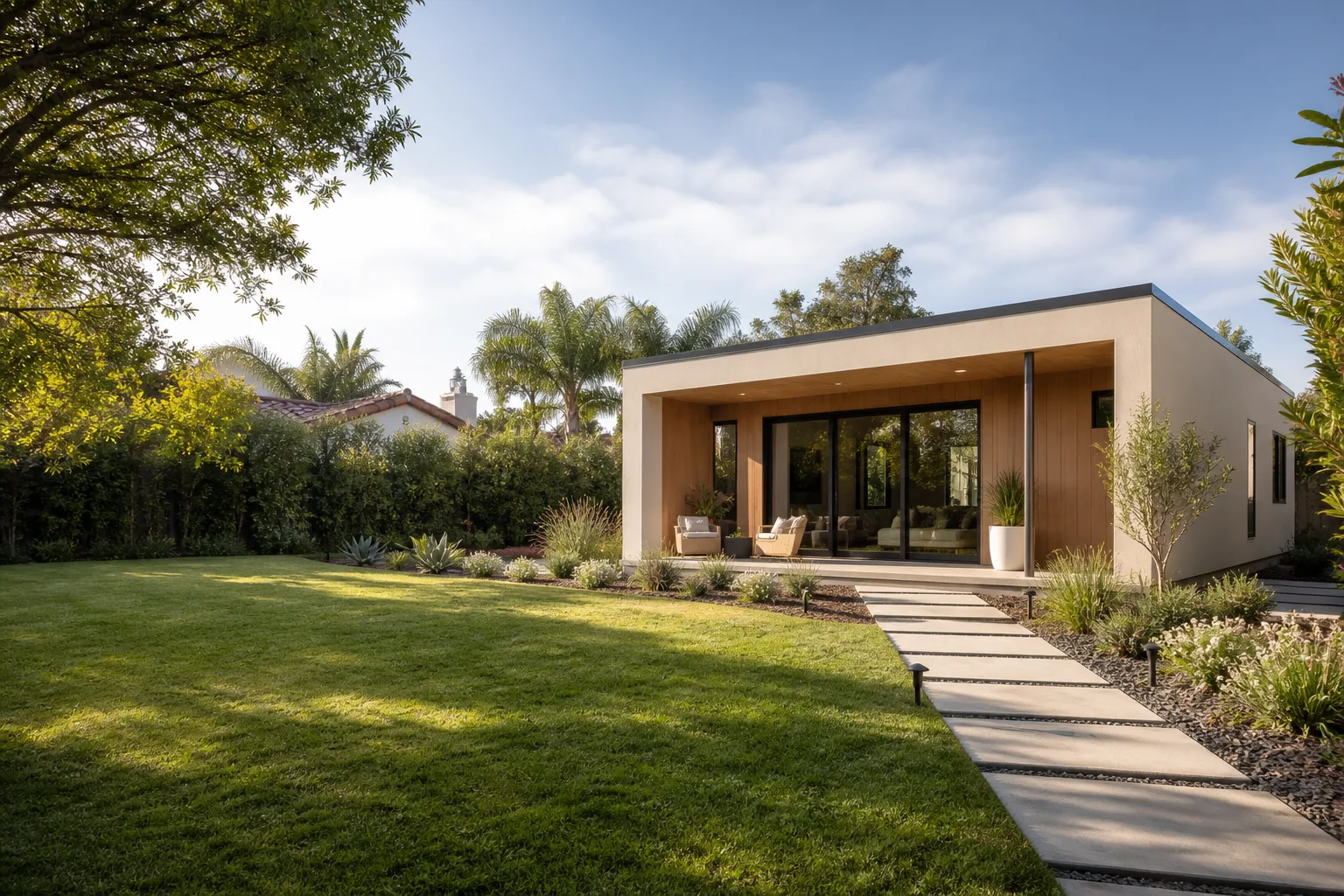
A fully detached unit is the most flexible and the most expensive: full foundation, full utility runs, full envelope, full finish package. This is where a homeowner’s design ambitions and finish choices have the most impact on the final number. Detached site-built in Paradise runs $300-$450 per square foot.
Prefab drop-in
Prefab units from manufacturers like Abodu and Cover arrive largely complete and get set on a prepared foundation. The unit cost per square foot can be attractive, but the site work (foundation, utility connections, grading) is where the all-in number lands. Budget $250-$400 per square foot all-in, and get the site work quoted separately so you can see exactly what the modular approach saves versus site-built.
Which Paradise-specific factors drive up cost?
National ADU cost guides won’t mention the three factors that most affect a Paradise project: caliche, summer pour scheduling, and local impact fees. These aren’t minor line items; together they can move your budget by 10-15%.
Caliche soil surcharges
Paradise sits in a region where caliche, a naturally cemented soil layer, is common. When a foundation excavation hits a thick caliche layer, the grading and excavation crew needs different equipment and more time to break through it. This shows up as a soil surcharge on your estimate, and it’s the reason a foundation quote from a contractor who hasn’t walked your lot isn’t worth much. A site-specific soil assessment before design finalizes is money well spent.
Summer pour scheduling
Concrete work in Paradise’s summer heat requires careful scheduling. Pours are often moved to early morning to avoid the worst of the day’s temperatures, and crews have a limited window to finish and cure each slab correctly. This compresses the available pour days and can extend the concrete phase of your project, which cascades into framing and the rest of the schedule. Budgeting for a realistic schedule, not an optimistic one, prevents the change orders that come from rushed work.
Clark County impact fees and permits
Permit and impact fees are a real line item in any Paradise ADU budget, and the exact amounts depend on the unit type, size, and the specific jurisdiction reviewing your plans. We confirm every fee schedule with the city’s planning or building department before plans are final, because published fee tables don’t always match what a specific project gets assessed. Build in a permit and fee allowance of several thousand dollars, and get the actual number confirmed before you sign a construction contract.
If you want a local read on your lot’s soil and scheduling realities, call (888) 576-4674 for a free estimate. We answer 24/7. Fast dispatch from 7am to 7pm, Sunday through Friday.
What do soft costs actually include?
Soft costs are the design, permitting, and professional fees that sit on top of hard construction. In Paradise, they commonly add 18-25% above the hard construction number, and homeowners who budget only for construction are the ones most often surprised mid-project.
Here’s the line-item breakdown:
- Design and drafting: Architectural drawings and plan sets that match what the city will review. Expect several thousand dollars for a full ADU plan set, more for a custom detached unit.
- Engineering: Structural, civil, and sometimes soil engineering, depending on the lot and unit type. Detached units and any project with a complex foundation carry more engineering cost.
- Permits and plan review: Application fees, plan review fees, and any impact fees the jurisdiction assesses. These vary by unit type and size.
- Utility connections: The trenching and connection work to bring water, sewer, and electrical to the unit. For a detached unit, this is a substantial line item; for a garage conversion, it’s often much smaller because the utilities are already at the main structure.
- Survey and site assessment: A survey of the lot and an assessment of soil and drainage conditions, which directly informs the foundation design.
- Construction management and inspections: Coordination across trades, scheduling, and the inspections that keep the project on track.
Ask for soft costs to be broken out separately in your estimate. A written line-item quote that shows construction and soft costs on separate lines is the only way to compare bids honestly. An ADU specialist will give you that breakdown without being asked twice.
Where does value engineering save money, and where does cutting budget backfire?
Value engineering works when it reduces cost without compromising how the building performs. It backfires when it trades a small savings now for a large repair later. Two zones in an ADU reliably punish budget cuts: mechanical systems and waterproofing.
Where value engineering genuinely saves money
- Simpler rooflines and footprints: A rectangular unit with a straightforward roof costs less to frame, sheath, and roof than an L-shaped design with multiple valleys and hips. This is real savings with no performance loss.
- Standardized window sizes and placements: Off-the-shelf window sizes cost less and install faster than custom sizes. Aligning openings to standard dimensions is one of the easiest savings in the design phase.
- Right-sized mechanical systems: A properly sized HVAC system for the unit’s actual square footage and insulation levels costs less to buy and less to run than an oversized system. This is engineering, not cutting corners.
- Finish selection: Flooring, cabinetry, and fixtures are where a budget has the most flexibility. Choosing durable mid-range finishes over premium ones can save meaningful money without affecting the unit’s longevity.
Where cutting budget creates expensive problems later
- Mechanical systems: Undersized or low-quality HVAC and ventilation systems in a Paradise ADU will struggle through summer heat. The system runs harder, fails sooner, and costs more to replace than the original upgrade would have cost.
- Waterproofing and envelope: This is the danger zone. A poorly detailed roof-to-wall connection or an underspecified waterproofing membrane shows up as water intrusion, rot, and mold within a few years. The repair cost dwarfs the original savings, and the damage often spreads into areas you can’t see.
If a bid comes in dramatically below the others, ask specifically what’s on the mechanical and waterproofing lines. That’s where the difference usually lives.
How does prefab pricing compare to site-built bids?
Prefab pricing looks lower on the brochure and often lands close to site-built once site work and delivery are honestly accounted for. The comparison only works when you put the same scope on both sides of the table.
Here’s how to run a fair comparison:
- Get the prefab unit price and what it includes. Confirm whether the quoted price covers the complete unit, interior finishes, mechanical systems, and delivery to your lot. Ask what’s excluded.
- Get the site work quoted separately. Foundation, utility trenching and connections, grading, crane or delivery access, and any soil work for caliche. This is the number that most often gets underestimated.
- Get a site-built bid for the same square footage and finish level. Match the finish specification so you’re comparing apples to apples.
- Add soft costs to both. Permits, engineering, and design apply to both pathways, though the design cost differs depending on whether the manufacturer supplies plan sets.
- Compare the all-in numbers and the schedules. A prefab unit may compress the on-site construction phase, but site work still takes time. Compare the total project duration, not just the construction phase.
We work with and know the major prefab platforms, including Abodu, Cover, and Dvele, and we also build site-built units. That means we can recommend the right fit for your lot and goals rather than steering you toward one vendor. A compact lot with good access often favors prefab; a lot with unusual geometry or a homeowner who wants a fully custom layout often favors site-built. For more on how this plays out locally, see our guide to building in Paradise.
How do you build a realistic ADU budget step by step?
A realistic budget starts with the lot, not the design. Working in the right order prevents the most common and most expensive budgeting mistake: falling in love with a design that your site can’t support economically.
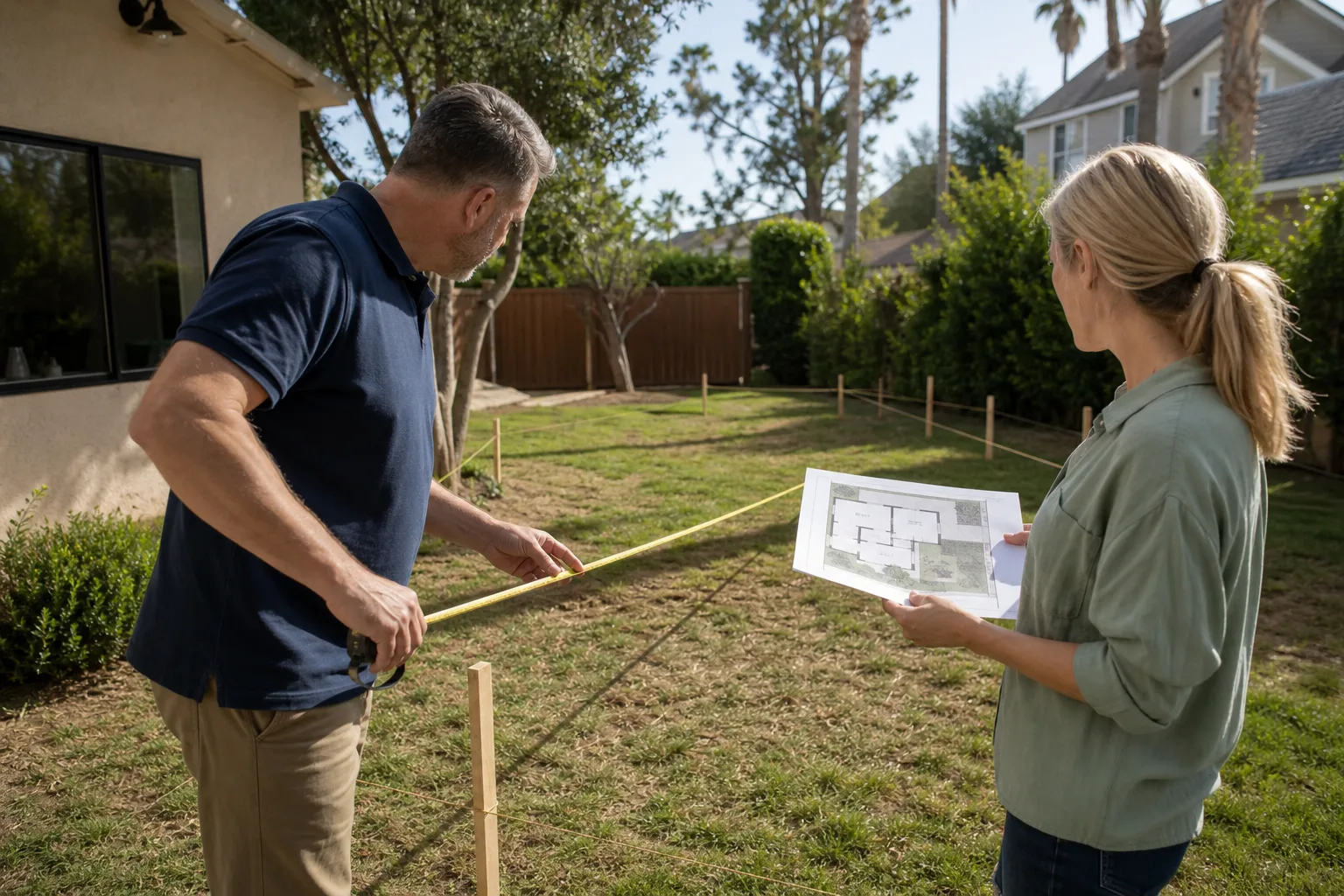
- Start with a site assessment. Have the lot evaluated for soil conditions (including caliche), drainage, and utility access. This determines what foundation and utility work you’re facing before any design decisions get made.
- Choose your ADU type. Based on the site assessment and your goals (rental income, family housing, long-term value), narrow to the unit types that make sense for your lot. This is where a specialist’s read on your property saves the most money.
- Set your hard construction target. Using the per-square-foot ranges in this guide, calculate a realistic construction budget for your chosen type and size. Add a contingency of at least 10% for site surprises.
- Add soft costs. Budget an additional 18-25% above hard construction for design, engineering, permits, and utility connections. Get the permit and fee numbers confirmed with the city’s planning or building department.
- Get a written line-item estimate. Require the estimate to separate construction and soft costs, and to list what’s included and excluded. Compare at least two bids on the same scope.
- Review the schedule and contingency together. Confirm how summer pour scheduling and inspection timelines affect the project calendar, and make sure your contingency covers a realistic delay.
Common mistakes to avoid
- Budgeting from a national per-square-foot average. The online $150 figure is a floor for very specific, favorable conditions, not a planning number. In Paradise, using it as a budget anchor leaves you short before framing begins.
- Skipping the soil assessment. Caliche is common in the Paradise area, and a foundation quote that doesn’t account for it will change once the excavator hits the ground. Assess first, then price.
- Treating prefab as a turnkey price. The unit price on a prefab brochure doesn’t include site work, delivery logistics, or utility connections. Compare all-in numbers, not unit prices.
- Cutting mechanical or waterproofing to hit a budget target. These are the two lines where savings turn into expensive repairs. Cut finishes instead; they’re the flexible part of the budget.
- Ignoring the summer pour calendar. Concrete in Paradise’s summer heat has a compressed scheduling window. An optimistic schedule that ignores this produces change orders and delays, not a faster project.
- Not separating soft costs from construction in the estimate. A single lump-sum quote makes it impossible to compare bids honestly or to see where the money is actually going.
- Assuming rental rules are uniform. Rules around renting an ADU depend on the city and are checked with the city. Don’t build a rental-income projection into your budget before you’ve confirmed what’s allowed on your property.
When to Call a Professional
Call an ADU specialist before you finalize a design, not after. If you’re evaluating whether your lot can support a detached unit, if your garage conversion plans involve moving or upgrading mechanical systems, if you’re weighing prefab against site-built and want an honest comparison, or if your soft-cost estimates haven’t been confirmed with the city’s planning department, those are the moments where a specialist’s input saves the most money. The same is true when a bid comes in far below the others: someone needs to read the mechanical and waterproofing lines before you sign. Casita Builders Paradise offers free estimates in Paradise. Call (888) 576-4674. We answer 24/7. Fast dispatch from 7am to 7pm, Sunday through Friday.
Frequently Asked Questions
Most Paradise ADU projects land between $90,000 and $340,000 in 2026, depending on type and finish level. Garage conversions sit at the low end, detached site-built units at the high end, and soft costs add roughly 18-25% above hard construction. Call (888) 576-4674 for an exact quote. Estimates are free.
Yes, typically by a wide margin. A garage conversion runs roughly $200-$320 per square foot because the shell, foundation, and roof already exist, while a detached site-built unit runs $300-$450 per square foot with full foundation and utility work. The conversion is often the highest-ROI path for an existing Paradise home. Call (888) 576-4674 to talk through your garage’s potential.
Not if the estimate is written correctly. A written line-item estimate that accounts for soil conditions, utility connections, and a reasonable contingency is designed to hold. The change orders that surprise homeowners usually come from estimates that skipped the site assessment or understated the mechanical scope. Call (888) 576-4674 and ask for a line-item breakdown.
Yes, permitting is part of the project. We confirm the specific requirements with the city’s planning or building department before plans are final, because the rules depend on the city and the lot. Permit and impact fees are broken out as a separate line in the estimate. Call (888) 576-4674 to start the permit conversation.
The schedule depends on the unit type, the site work, and the inspection timeline, so it’s set in the written estimate rather than promised off the cuff. Summer concrete scheduling can extend the foundation phase, and a garage conversion moves faster than a detached build. Call (888) 576-4674 for a schedule tied to your specific project.
Yes. Caliche is a cemented soil layer common in the Paradise area, and breaking through it requires different equipment and more time. That shows up as a soil surcharge in the foundation portion of your estimate. A site assessment before design finalizes is the best way to keep that number predictable. Call (888) 576-4674 to schedule an assessment.
The Bottom Line
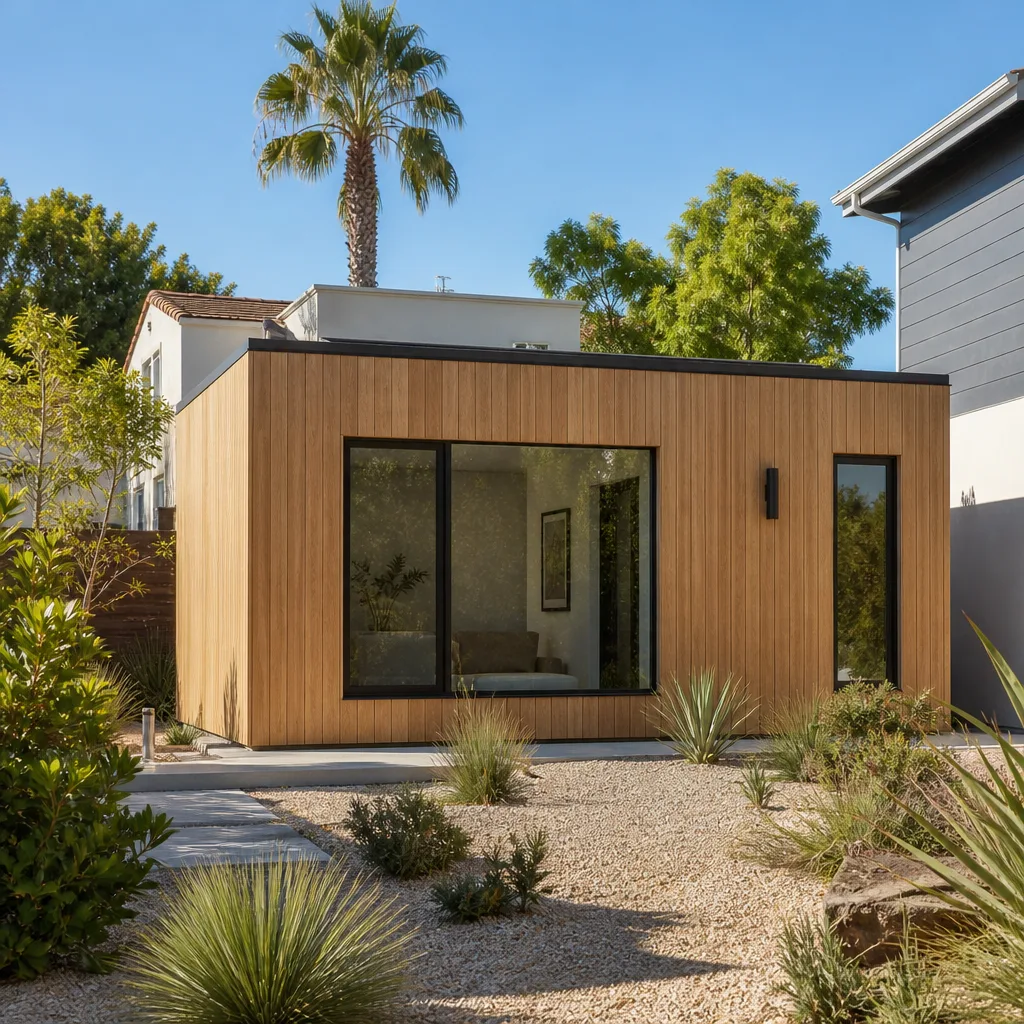
The $150-per-square-foot figure is a floor, not an average, and the real spread in Paradise runs from about $90,000 for a garage conversion to $340,000 for a custom detached unit. Four things control where your project lands: the ADU type you choose, the soil and utility conditions on your lot, the finish level you select, and whether your estimate breaks out soft costs honestly. Value engineering works in finishes and simpler footprints; it backfires in mechanical systems and waterproofing. Get the site assessed, get a written line-item estimate, and compare prefab and site-built on all-in numbers. Your property, fully realized, starts with an honest budget.
Call (888) 576-4674 to schedule your free estimate. We answer 24/7. Fast dispatch from 7am to 7pm, Sunday through Friday.
Written by the team at Casita Builders Paradise.