Last updated November 18, 2026
ADU Site Preparation: What Happens Before Framing Starts
The most common reason an ADU project blows its budget isn’t materials or labor. It’s what a crew finds three feet underground during site prep that nobody budgeted for. Homeowners spend months choosing layouts, finishes, and whether to go prefab or site-built, then treat the ground itself as an afterthought. In Paradise, where the desert hides hardpan, old utility lines, and drainage quirks under what looks like a flat, empty lot, that oversight gets expensive fast. This guide walks through every stage of ADU site preparation in the order it actually happens, what each stage discovers and gates, and where the surprises hide, so you can budget with your eyes open. Mention Paradise once.
Quick Answer
ADU site preparation in Paradise follows a set sequence: a boundary and topographic survey, soil testing (especially for caliche), utility locates, grading and excavation, then utility trenching and foundation work, before any framing begins. Each stage gates the next, and each can turn up conditions that change cost and schedule. Budget for site prep as its own line item, not a rounding error, and get the survey and soil work done before you finalize plans.
Table of Contents
- Why Site Prep Is Where Budgets Slip
- The Site Prep Sequence, Step by Step
- Caliche and Las Vegas Valley Soil: What It Means for Paradise Lots
- Utility Stub-Outs and Panel Upgrades: The Decisions That Move Your Final Cost
- Same Lot, Different Prep: Ground-Up vs. Garage Conversion vs. Prefab Drop
- Red Flags in the First Five Days
- How to Budget Site Prep Without Guessing
- Common Mistakes to Avoid
- When to Call a Professional
Why Site Prep Is Where Budgets Slip
Most homeowners price an ADU the way they price a car: they pick the model, add options, and expect the total to land within a few percent of the sticker. The ground doesn’t work that way. Site preparation is investigative work. You don’t know exactly what a Paradise lot is made of until you dig a test pit, run a locate, and grade it. That uncertainty is the whole reason prep exists. The goal isn’t to eliminate surprises; it’s to find them on paper, with a surveyor and a soil report, instead of mid-excavation with a crew standing around.
In our experience as an ADU builders specialist, the projects that stay on budget are the ones where the homeowner agreed to pay for investigation up front. Soil borings, a real survey, and utility locates cost money, and it can sting to spend on work that leaves nothing visible behind. But that money buys certainty, and certainty is what keeps the framing phase boring in the best way.
The reverse is also true. When a project skips a step to save a few weeks, the discovery just moves downstream, and by then it’s wrapped around a fixed foundation design or a signed prefab delivery date. Caliche you didn’t test for becomes excavation you didn’t budget. A sewer lateral you assumed was shallow becomes a re-route. That’s not a contractor failure. It’s what happens when discovery gets deferred.
The Site Prep Sequence, Step by Step
Here’s the order that works, and why the order matters. Each step produces information the next step depends on, so skipping ahead means redoing work. This is the same general sequence regardless of whether you’re building on a lot in Paradise or elsewhere in the valley; the specifics of each step depend on your lot.
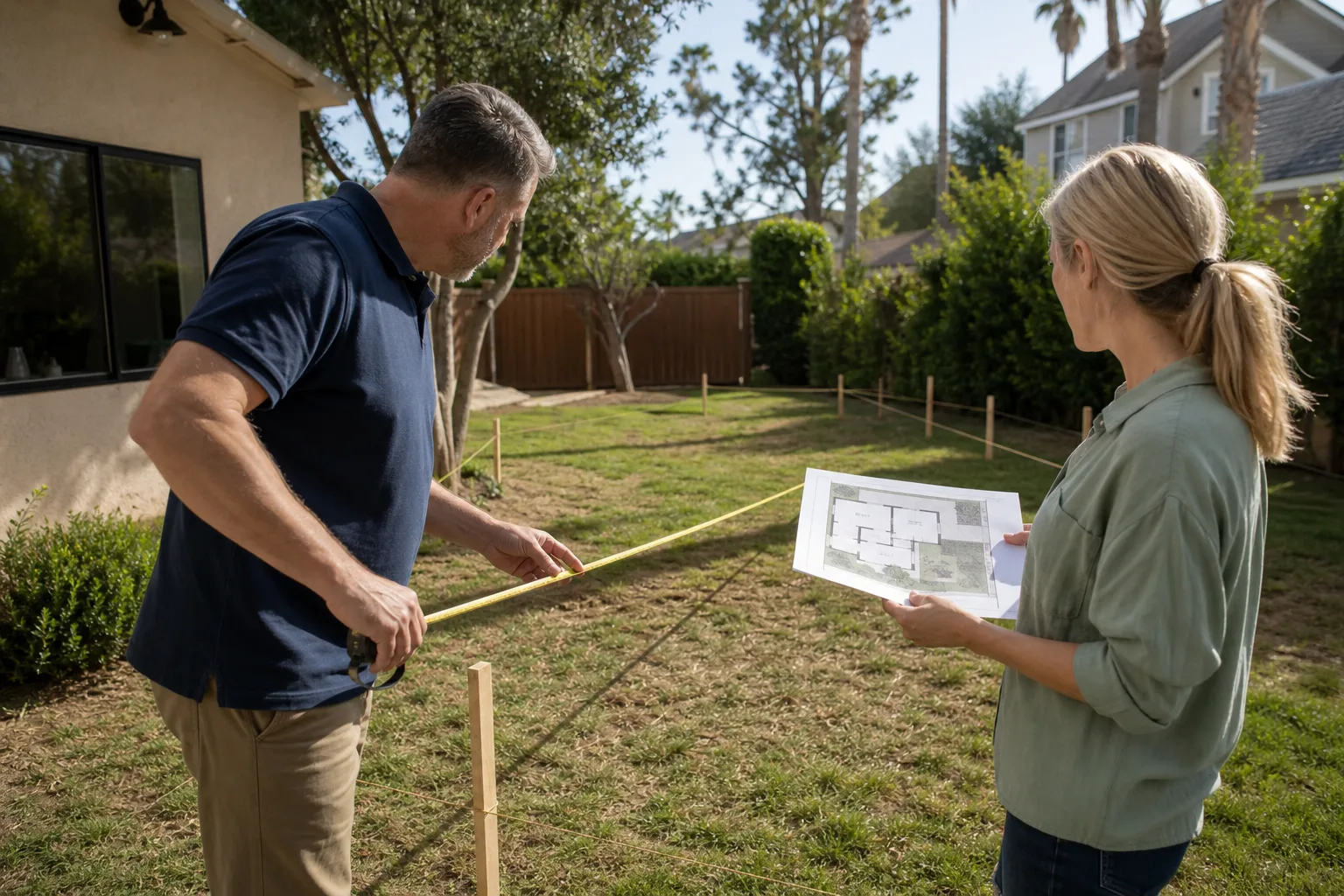
- Boundary and topographic survey. A licensed surveyor confirms where your property lines actually are and maps the existing grade, easements, and any encroachments. Setbacks and where the ADU can sit depend on this. Doing it first prevents drawing plans you can’t build.
- Soil testing. A geotechnical engineer digs test pits or borings and reports what the soil is. In the Las Vegas Valley, this is where caliche gets identified. Foundation design and excavation estimates come from this report.
- Utility locates. Before anyone puts a shovel in the ground, the existing underground lines (water, sewer, gas, electric, communications) get marked. This protects you and the crew, and it reveals where connections can reasonably land.
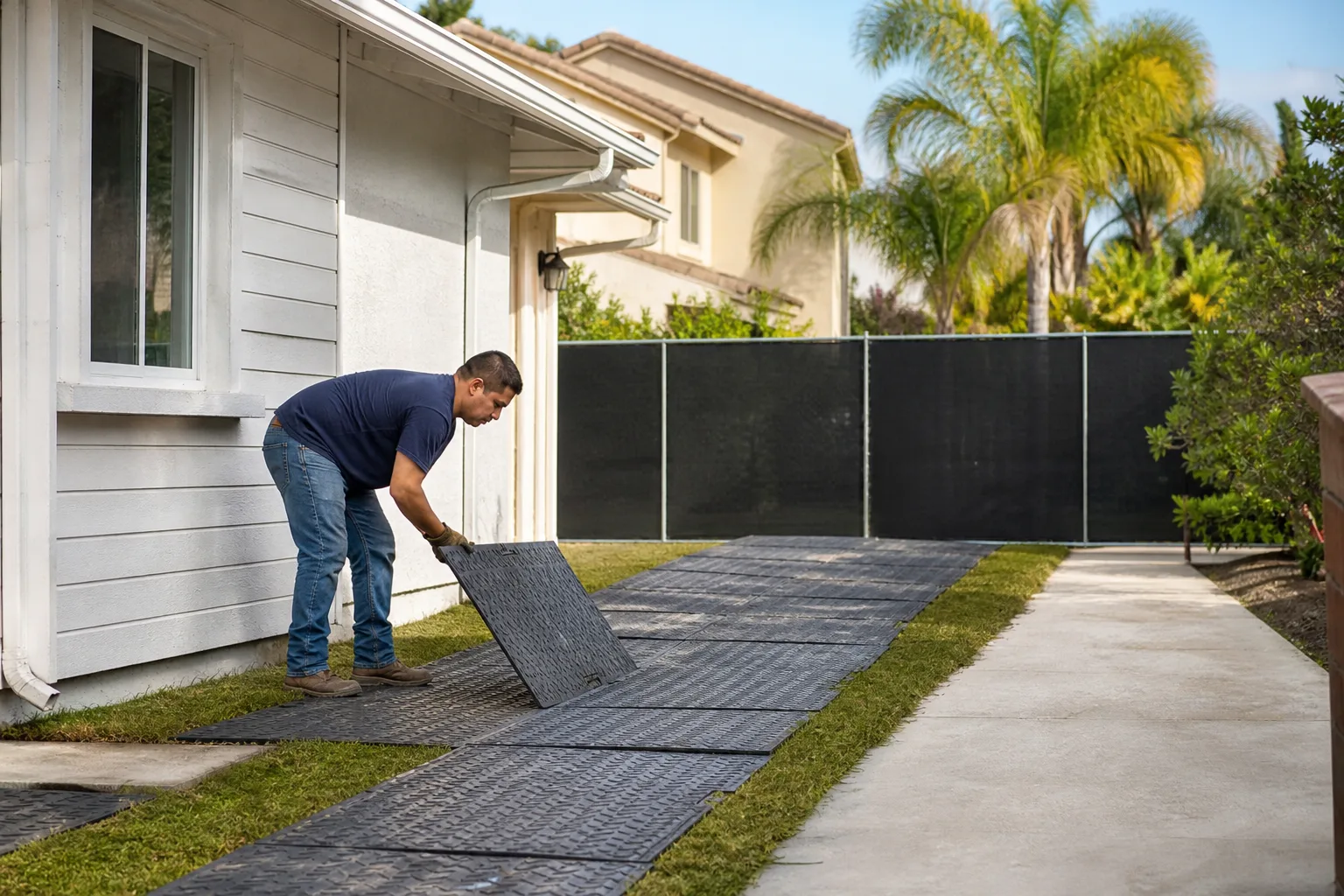
- Grading and demolition. The lot gets cleared and graded to the design elevations. Old concrete, sheds, or landscaping that’s in the way comes out. Correct grading also sets up drainage, which matters more here than in wet climates because a graded lot in the desert still needs to shed stormwater away from structures.
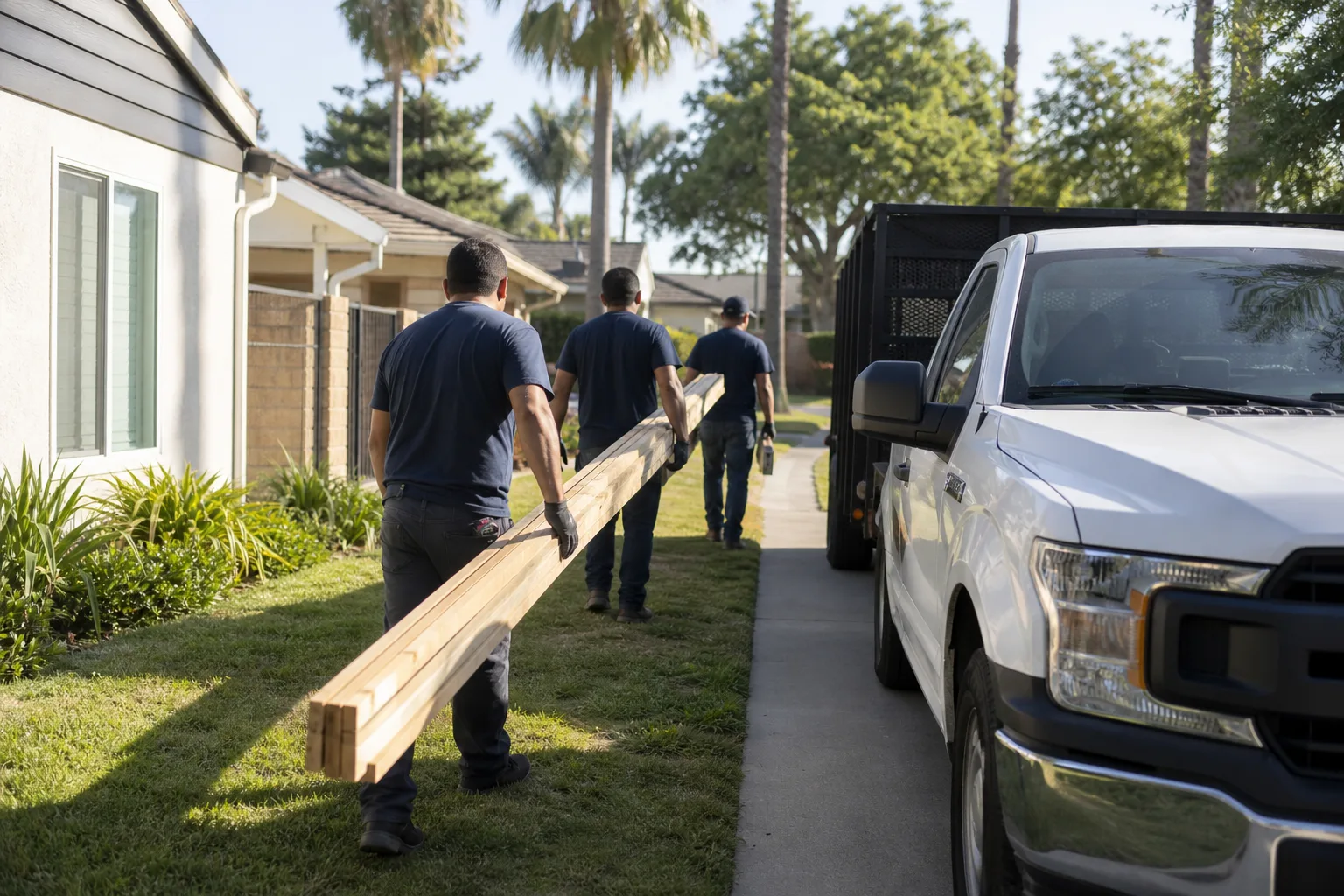
- Utility trenching and connections. Water, sewer, gas, and electric get run to the ADU location from their connection points. This is where stub-out decisions get made and panel capacity gets confirmed.
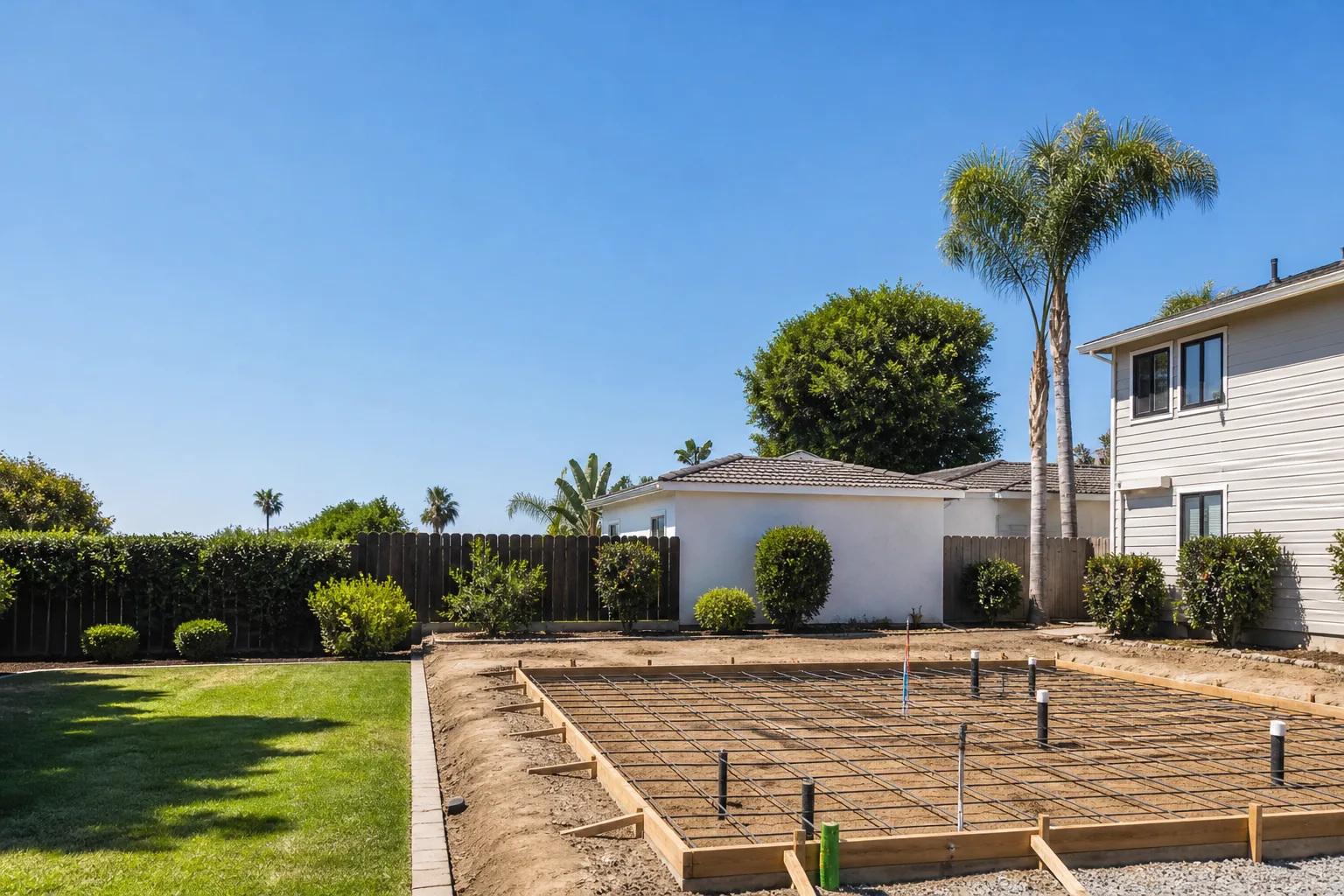
- Foundation work. Footings, slab, or other foundation per the soil report and the design. Once this is done, the ground phase is over and framing can start.
Notice that the first three steps are all investigation. They produce no visible progress. That’s normal, and it’s why they’re the easiest to skip and the most expensive to skip. If your contractor isn’t doing them, that’s worth a conversation.
Caliche and Las Vegas Valley Soil: What It Means for Paradise Lots
Caliche, also called hardpan, is a layer of soil cemented together by calcium carbonate. It forms in arid climates where water evaporates and leaves minerals behind. The Las Vegas Valley has a lot of it. For an ADU project, caliche is the single most common reason excavation takes longer and costs more than expected, and it’s the reason soil testing isn’t optional here. A competitor in a state without hardpan might never mention it. On a Paradise lot, it can be the difference between a routine dig and a slow one.
What caliche does to a project:
- Slows excavation dramatically. Standard digging equipment can struggle against cemented hardpan. It may need to be broken up or removed differently than loose soil, which adds time and equipment cost.
- Affects foundation depth. The foundation has to bear on stable soil. If the caliche layer is where good bearing capacity lives, the design may need to reach it, or account for the layers above and below.
- Changes the backfill story. Excavated caliche may not go back in the same way loose soil does, so removal and import costs can change.
- Varies lot to lot, sometimes within a single lot. Depth and thickness of caliche are not uniform across the valley. The report from a nearby lot is not your report.
This is why we treat soil testing as a gate, not a formality. In our experience, homeowners who test first and design second make calm, informed decisions. Homeowners who design first and test later face a call mid-project where the options are all more expensive than they wanted. For a site-built ADU or a room addition contractor project, that call comes fast. Knowing what’s under the lot early is how you avoid it.
Utility Stub-Outs and Panel Upgrades: The Decisions That Move Your Final Cost
Ask an ADU specialist what design choice moves the final cost most, and the honest answer is often something that gets decided in a trench. Utility connection decisions made during site prep can swing your ADU budget more than any finish selection. You can always downgrade counters later. You can’t easily relocate a sewer line after the slab is poured.
Two decisions dominate:
- Where the sewer connection goes. Does the ADU tie into the existing sewer lateral, does that lateral need to be up-sized or re-routed, and can a new ADU legally connect at all on your lot? A sewer lateral route is often dictated by grade and distance, not preference. The cost difference between a straightforward connection and a re-route can be significant, and you want to know which you’re in before you sign a prefab order.
- When the electrical panel gets upgraded. An ADU adds load. If your existing panel doesn’t have room, a panel upgrade can be the largest single line item in the project, and in Paradise it has to be planned with the utility. Doing this during site prep is far cheaper than discovering it after the ADU is wired and waiting on power.
This is where working with an ADU specialist pays off, because a general contractor who does a few ADUs a year doesn’t meet these decisions often enough to see them coming. We’ve spent the time on utility connection planning across many Paradise projects, and that knowledge is what lets us flag a costly choice before it happens. For a garage conversion in particular, the ADU often needs a separate utility connection and metering, which is its own planning conversation.
Same Lot, Different Prep: Ground-Up vs. Garage Conversion vs. Prefab Drop
Three ADU pathways, three different site prep stories on the same piece of land. This is the part of the process most homeowners underestimate. The prep doesn’t just scale; it changes shape.
Ground-up ADU construction. This is the largest prep scope. Survey, soil testing, utility locates, grading, excavation, utility trenching, and full foundation. Everything above happens. This is where you need to budget the most for investigation and ground work, and where caliche on a Paradise lot most often appears.
Garage conversion. A conversion starts from an existing structure, so the foundation and utilities are partly there. But you still need a survey to confirm setbacks and lot coverage, and you still need to check the existing electric service and how sewer and water reach the conversion. The prep is lighter than a ground-up build, but it’s not zero. Garage conversions are one of the highest-ROI ADU paths for a reason, precisely because so much site work is already done.
Prefab unit drop. Prefab systems from brands like Abodu, Cover, or Dvele have their own site prep requirements, and they still depend on your lot. The unit arrives built, but the ground still has to be surveyed, graded, and prepared, utilities still have to be run, and the foundation still has to be designed. The prep work doesn’t disappear; it shifts. A site that passed a conversion-style review might still need major utility work to serve a standalone unit.
Because we work with Abodu, Cover, and Dvele and also build site-built ADUs and conversions, we can compare these honestly on your lot. Prefab or custom, we know both, and the recommendation depends on what your Paradise site can actually support.
Red Flags in the First Five Days
You don’t need to be in the trades to window into whether your site prep is being done carefully. The early days of a project follow a predictable rhythm, and deviation is a signal. Here’s what you should actually see happening in the first five days, and what should raise a question.
- Survey markers and stakes. By the end of the first days, your lot should show survey markers or staking showing where lines and the buildable area sit. No stakes means either the survey wasn’t done or it isn’t being used.
- Paint or flags on the ground. Utility locate marks should be visible before excavation starts. If the first dig happens with no locate marks, stop it.
- Test pits or a soil report referenced. You should be told what the soil report said and what it means for your foundation. If nobody mentions caliche on a Paradise lot, ask.
- Grading aligned with plans. The grade should match the plan you approved, not whatever the machine happened to do. Uneven, unplanned cuts are worth a question.
- Utility route conversation. Your contractor should be talking with you about where water, sewer, and electric run and what it will cost to connect them, before framing starts.
- Written confirmation at each gate. The survey and soil findings should be reflected in what you’re told and in your compiled scope. If the gates are being skipped, get it in writing.
A contractor cutting corners often signals it by moving quickly. The best sign of solid work is deliberate sequence, questioning, and documented decisions before the ground is disturbed.
How to Budget Site Prep Without Guessing
Site prep costs are estimates until the ground is tested. That’s why the strongest budgeting move is to have site prep priced separately, on a written line-item quote after the survey and soil report are in hand. In Paradise, caliche and utility conditions make a generic number unreliable. Getting a written estimate that accounts for what was found is the only honest way to budget.
What your site prep budget should cover, in order:
- Survey and soil testing. Pay for these as their own line items. They’re the informational foundation of the whole project.
- Utility locates and reset/repair of anything the locate missed. Usually small, always essential.
- Grading and demolition. Priced after the survey and site conditions are known.
- Excavation, including caliche handling. This line item is where a soil report earns its keep.
- Utility trenching and connection. Sewer lateral, water, gas, electric, plus any panel upgrade.
- Foundation. Sized from the soil report and the design.
When you get a written line-item estimate from us, each of these sits on its own line, so you can see what moved and why. The final price is set by the written estimate, not by a verbal guess thrown out during a walkthrough. That distinction is worth insisting on for a five-figure site prep phase.
Common Mistakes to Avoid
- Skipping soil testing because the lot looks flat. Flat and stable aren’t the same thing. In the Las Vegas Valley, flat lots can still hide a thick caliche layer that changes excavation and foundation plans.
- Ordering a prefab unit before the site is assessed. Prefab delivery dates are firm. If your Paradise lot turns up utility or grading issues after the order is placed, the window shrinks fast.
- Treating utility locates as a formality. The lines marked before you dig are the ones you can’t move later. A few dollars of locating work prevents a much larger repair bill.
- Failing to plan the electrical panel upgrade early. An ADU adds load, and a panel upgrade can be the biggest line item in the project. Discovering it late squeezes everything else.
- Assuming a garage conversion needs no site prep. Setbacks, lot coverage, electrical service, and utility connections still need to be confirmed, even though the foundation footprint already exists.
- Letting grading drift from the approved plan. The grade determines drainage and how the ADU sits on the lot. Small deviations become structural drainage problems later.
- Not getting site prep priced separately. A single lump sum hiding your ground work makes it impossible to see whether the estimate reflects what was actually found. Ask for a line-item quote.
When to Call a Professional
Call an ADU specialist when your lot hasn’t been surveyed or soil-tested, when you’re weighing prefab against site-built and need an honest comparison, or when a previous contractor’s site work is unclear and you want a second set of eyes before money moves. Call us if you own a Paradise lot and feel unsure what’s under it. Call us before you sign a prefab delivery order, so we can confirm the ground will be ready when the unit arrives. Call us if you’re planning a garage conversion and want to know how much site prep is actually involved, or considering a room addition and wanting the utility planning done before the framing crew shows up. We answer 24/7. Fast dispatch from 7am to 7pm, Sunday through Friday. Call (888) 576-4674.
Frequently Asked Questions
It includes a boundary and topographic survey, soil testing (including caliche check), utility locates, grading and demolition, utility trenching and connections, and foundation work. Each stage gates the next, and the whole phase must be complete before framing starts. Call (888) 576-4674 for an exact quote on your lot; estimates are free.
Caliche is a cemented hardpan layer common in the Las Vegas Valley, and it can slow excavation and change foundation design and backfill costs. It’s the single most common reason site prep runs longer than expected here. Call (888) 576-4674 to arrange a soil assessment for your Paradise lot.
Site prep is priced per job by a written line-item estimate after the survey and soil report are done, so the number reflects your actual lot rather than a generic figure. Call (888) 576-4674 for a free estimate.
Your written line-item estimate is the price, with no surprise change orders added after framing begins. Ground conditions found during the survey and soil testing are built into the estimate up front. Call (888) 576-4674 for a free written quote.
We work through the required permits for your project with your city’s building and planning department, and we confirm the specific requirements for your lot before plans are final. Call (888) 576-4674 to talk through your Paradise project.
Yes. A prefab unit saves on framing and assembly, but the ground still has to be surveyed, graded, and prepared, and utilities still have to be run to the site. We work with all three brands and can compare prefab and site-built honestly for your lot. Call (888) 576-4674 for a free estimate.
The Bottom Line
ADU site prep follows a fixed sequence for a reason: each stage produces information the next one needs, and skipping steps just moves the surprise to a more expensive moment. In Paradise, that means treating soil testing for caliche and utility connection planning as non-negotiable parts of the budget, not optional extras. Survey, soil report, locates, grading, trenching, foundation. Ground-up builds, garage conversions, and prefab drops each prep differently on the same lot, so the plan has to fit your site. Get site prep priced as its own written line item, and you’ll spend the framing phase watching a build instead of worrying about the ground.
To talk through site prep for your Paradise project, call (888) 576-4674 for a free estimate. We answer 24/7. Fast dispatch from 7am to 7pm, Sunday through Friday. You’ll get a written line-item quote, clear answers on permits and utilities, and an honest read on what prefab or custom, Casita Builders Paradise, and our ADU specialists can do for your lot.
Written by the team at Casita Builders Paradise.